

Is Philip Pullman of Aslan's Party Without Knowing It?
What Pullman misses about Narnia – plus bonus talk and essay on innocence, experience and the Fall in C. S. Lewis's Chronicles of Narnia and Philip Pullman's His Dark Materials

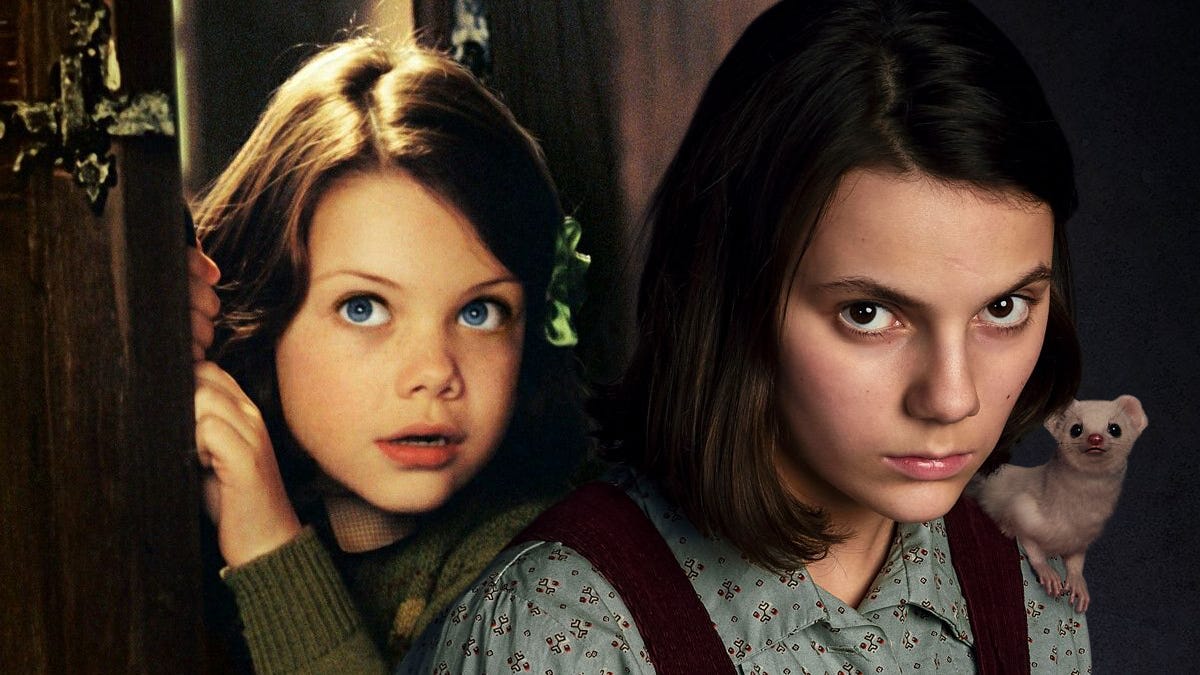
Pullman recently went on Alex O’Connor’s Within Reason podcast, reiterating his long-held, self-described hatred of Narnia – he thinks Lewis tells lies to children. But what do Lewis and Pullman have in common with their view of imagination? Can you have a Republic of Heaven instead of a Kingdom? Is Pullman "of Aslan's party without knowing it"?
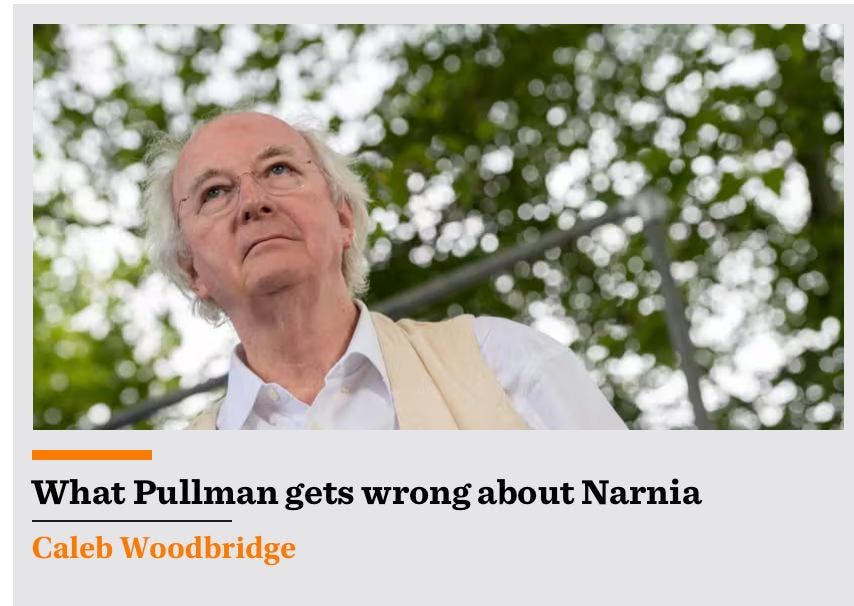
I was delighted that the Critic online magazine chose to publish my response to why Philip Pullman, exploring how he is more like C. S. Lewis than he might think.
I’ve enjoyed the discussion it has created, with long threads debating it on Facebook groups about C. S. Lewis, mythology and science fiction.
Check it out and let me know what you think – and keep reading here for further reflections on this debate from my academic paper on the topic…
A bonus for supporters
My article for the Critic is based on an academic paper I gave at the C. S. Lewis International Interdisciplinary Conference back in November. As a bonus for my supporters, I’m including my paper and a video of me delivering it below, covering the topic from some different angles (plus a bunch of footnotes!)

Almost all my output is available freely, but as a freelance writer and editor, I give a significant amount of time to writing and podcasting about imagination, meaning-making and faith here on Substack.
That comes with real costs: financial (software subscriptions and the like) as well as time and opportunity cost – it’s time I’m then not spending doing paid editorial work.
Of Man’s First Disobedience: innocence, wisdom and the Fall in The Chronicles of Narnia and His Dark Materials
Down through the years, poets, storytellers and theologians have interpreted and reinterpreted the origin myth of the Fall. C. S. Lewis and Phillip Pullman each reimagine the Fall as a way of engaging with questions of innocence and wisdom, and what it means to grow up as a human being.
Pullman’s trilogy is very consciously a response to the Narnia books, both deeply influenced by them and seeking to repudiate many of their messages. “I hate the Narnia books,” said Pullman, “and I hate them with deep and bitter passion, with their view of childhood as a golden age from which sexuality and adulthood are a falling away”.1
But is this an accurate appraisal of the Narnia books, and are the ideas of childhood and growing up in Pullman’s His Dark Materials trilogy really so different? I believe that while there are deep theological differences, there are also some surprising affinities and continuities, as we’ll explore.
The differences in outlook are evident from their very beginnings. There is an intriguing parallel with The Lion, the Witch and the Wardrobe in the opening chapter of Northern Lights: both share in the characters of Lucy and Lyra young female protagonists who each have a strong sense of curiosity, and crucially, both begin their adventures by hiding in a wardrobe.
But the differing circumstances in which they do so encapsulates the deep difference in outlooks between the two stories: Lyra is trespassing, a transgression of the rules, whereas Lucy’s exploration is innocent. What are the implications of this?