

What I discovered about C. S. Lewis in Romania
My reflections on attending the C. S. Lewis International Interdisciplinary Conference in Iaşi, Romania, 19–22 November 2025

Hello and a special welcome to recent subscribers! The launch of season 2 of the Imaginative Discipleship podcast with my interview with Malcolm Guite has brought in a lot of new people. I hope you enjoy my written articles as much as the podcasts! And if you’ve not checked it out yet you can find it here:

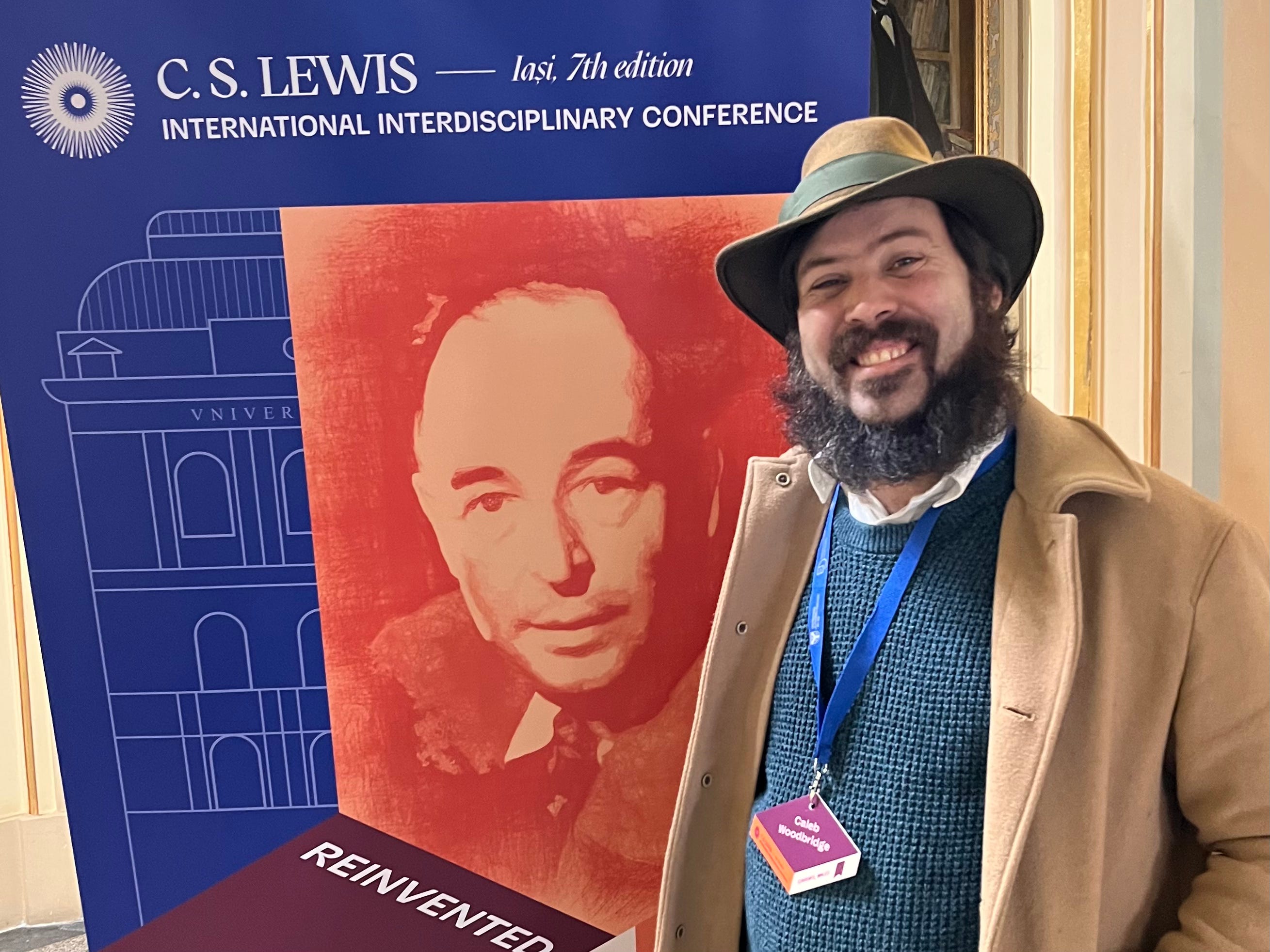
But today I want to look back on one of my absolute highlights of 2025, which was participating in the C. S. Lewis International Interdisciplinary Conference in Romania. It also helps to serve as an introduction to the different threads of my interests – literature, imagination and Christian discipleship, from academic, popular and pastoral angles.
Just after the conference came the sad news that one of the speakers, James Como, had passed away — read on for my tribute to him below.
Why I went to the conference
Currently I’m doing the Growing Churches Programme with Wales Leadership Forum part-time to help me grow as an evangelist and cultural apologist here in Wales, alongside my freelance writing and editing.
The conference itself is multi-threaded, with academic, creative and community aspects to it. So it brought together multiple threads in my own interests and sense of calling, including academic, creative and Christian apologetics strands.
It’s a while since I was fully engaged in the world of academia – I did my English Literature MA, in which I focused on children’s literature and medievalism, especially Tolkien, Lewis and T H White, all the way back in 2010–11, and last gave an academic conference paper at the The Child and the Book conference in Cambridge all the way back in 2012(!). But I have very much remained engaged in thinking about Lewis and the Inklings, children’s literature, and Christian apologetics in more informal ways through the years.
C. S. Lewis has also figured into my freelance editing work – one of my projects earlier this year was editing Other Watchful Dragons: C.S. Lewis’s The Chronicles of Narnia and Cross-Cultural Apologetics by Jonathan M Parker (Wipf & Stock, out now - more on this soon!), which was a real delight to work on, as well as helpful for sharpening my understanding of the potential of narrative and imaginative apologetics!
Lewis’s staggering levels of polymath genius across academia, creative writing and Christian apologetics is both daunting and inspiring, and while I don’t dare aspire to ever be a “new C. S. Lewis” I hope that my mix of intellectual, creative and apologetics activities can in some way draw on his example, as befits my own modest gifts and moment in history.

The Romanian connection
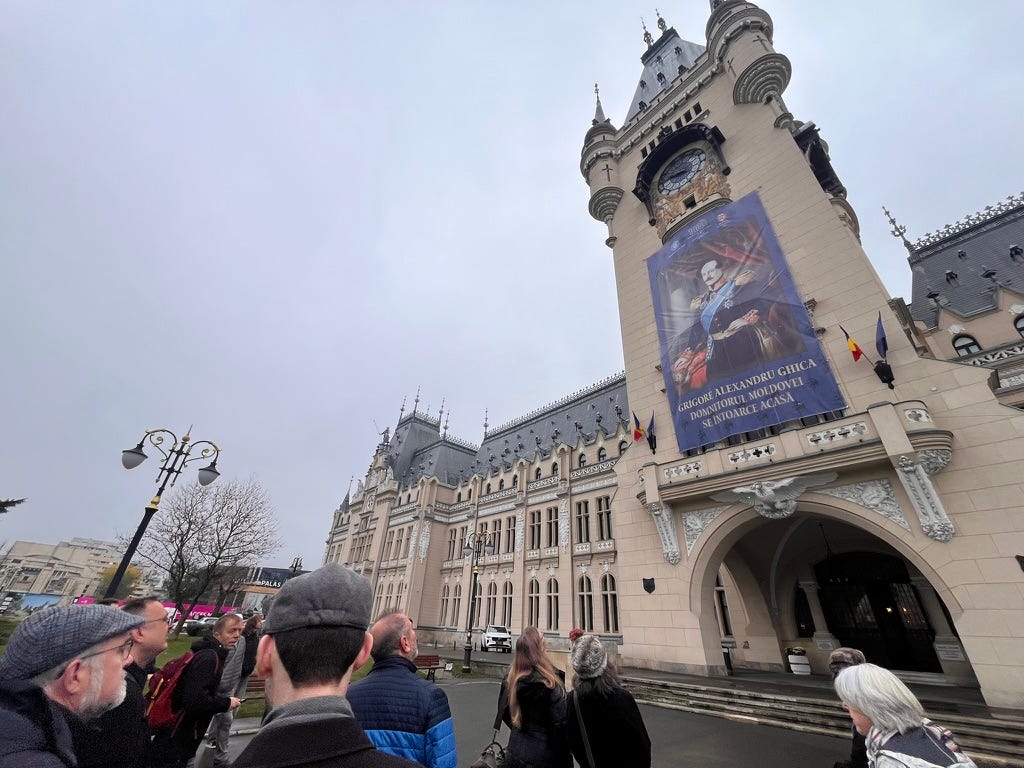
You might wonder why an international C. S. Lewis conference is held in Romania – what’s the link? One of the fascinating aspects of the conference for me was discovering the strength of the local C. S. Lewis & Kindred Spirits Society. Much of the credit for the conference and the local interest in Lewis lies with organiser Denise Vasiliu, who has worked over many years to establish the event as a biannual fixture.
But she was planting in well-prepared cultural soil: Romanian Christians had read Lewis in secret during the Communist era, and Romanian readers found in the White Witch’s regime of spies and secret police a powerful resonance with their own experience.
In attendance at the conference was Teodora Ghiviriga, now an associate professor at the University of Alexandru Ioan Cuza in Iaşi, who had studied English and Romanian in the 1980s in the last days of the Communist regime. As a student, she had gone to the British Consul to ask for English books to read, and one of those she was given and read was The Lion, the Witch and the Wardrobe. She gave it to one of her professors enthusiastically, who read it and who (if I remember the story correctly) went on to translate several of the Narnia books into Romanian – and who was herself present at the conference.
Conference highlights
Malcolm Guite - a poet in Narnia
My journey to the conference began auspiciously, ending up sat in the row in front of the wonderful poet Malcolm Guite.
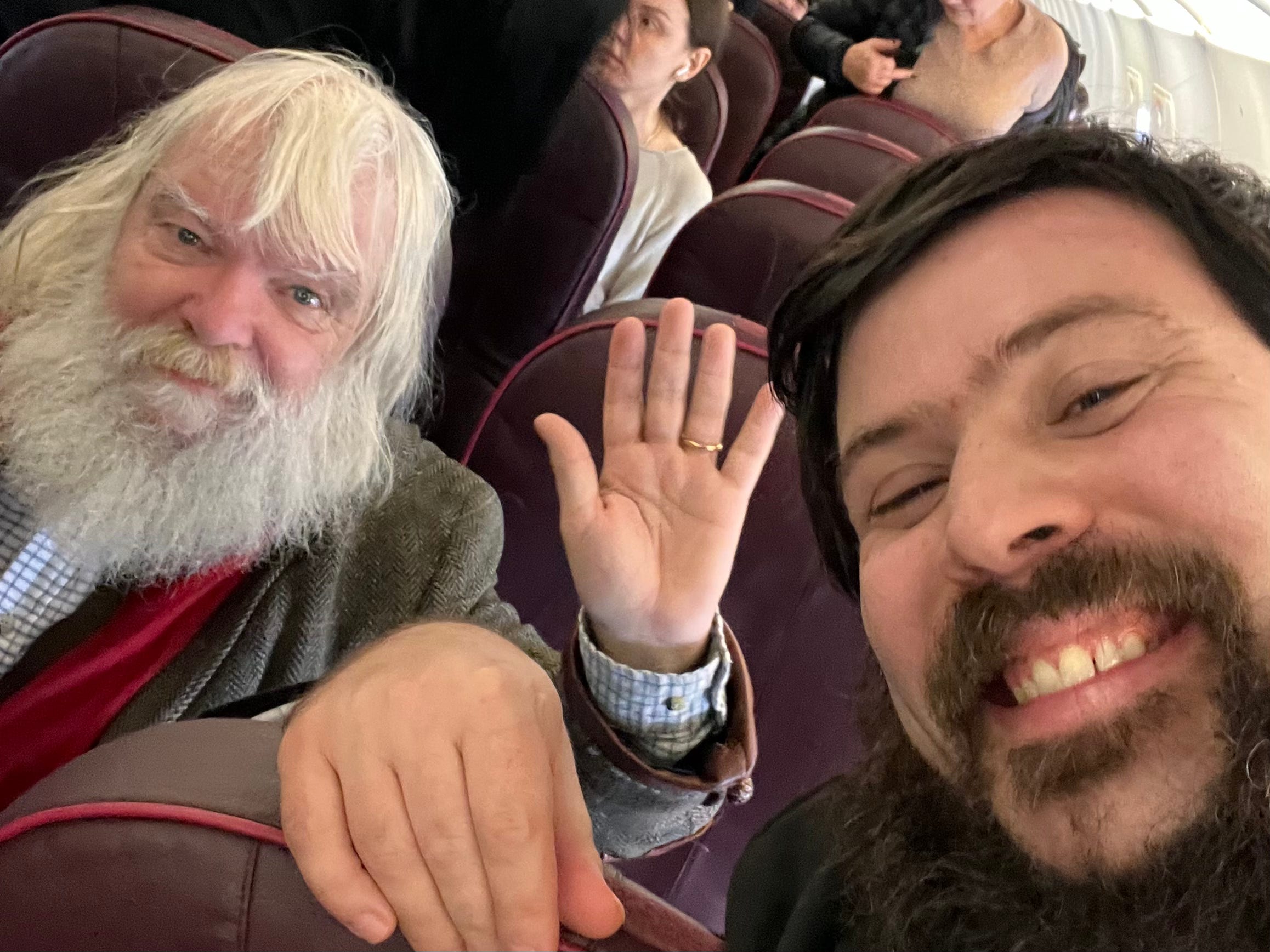
Guite delivered one of my conference highlights with a epic poem retelling of parts of The Lion, the Witch and the Wardrobe, written from the perspective of a Narnian court poet, which was homework he set for his school pupils as a teacher in the 1980s. (Perhaps when Malcolm has finished his Arthuriad, he can complete his Narnian poetic cycle ready for Lewis’s works to go out of copyright in 2034 - less than a decade to go now!)
You can watch him read some of his lost Narnia poem on YouTube:
Lewis’s Christian apologetics, Wales and publishing
Another talk I found particularly interesting was Dr Paul E. Michelson’s plenary about C. S. Lewis’s Christian apologetics, focusing on a lecture he gave on 1st April, 1945 to a conference for Church in Wales youth leaders and junior clergy in Carmarthen, Wales. The essay is collected in God in the Dock (published 1970) and while I’m sure I’ve read it before, realising the Welsh context piqued my interest particularly.
One point from Lewis’s lecture that Dr Michelson did draw out that I found interesting as an editor and publisher was Lewis’s suggestion about the apologetic need for books from an implicitly Christian perspective about everything:
What we want is not more little books about Christianity, but more little books by Christians on other subjects with their Christianity latent… The first step to the reconversion of this country is a series, produced by Christians, which can beat the Penguin and the Thinkers Library on their own ground. Its Christianity would have to be latent, not explicit: and of course its science perfectly honest. Science twisted in the interest of apologetics would be sin and folly.
Part of my editorial grid for books when working as Publishing Director for IVP Books UK was precisely for “Christian books about everything”, though market realities make it harder for Christian books to break out of their niche than I would like. But I do think this is a genuine need and one that continues to be under-served.
And I think the challenge for me as a writer and sometime Christian cultural apologist is to make sure that I don’t spend too much time talking about Christianity, so much as engaging with all kinds of topics from a Christian perspective.
Creative and community threads
Another aspect of the conference I particularly appreciated was the focus not just on ideas, but on creativity and community. Kirstin Jeffrey Johnson set a really positive tone early on by reminding us to not just see one another, and particularly the more distinguished speakers, as ‘resources’ to be mined for ideas and connections, but as people. The friendly, collegiate atmosphere and all the fascinating people and conversations I had were just so rich and encouraging. I daren’t start naming names because I’m sure to miss off people I loved conversing with, but everyone was a real delight to meet and begin to get to know.
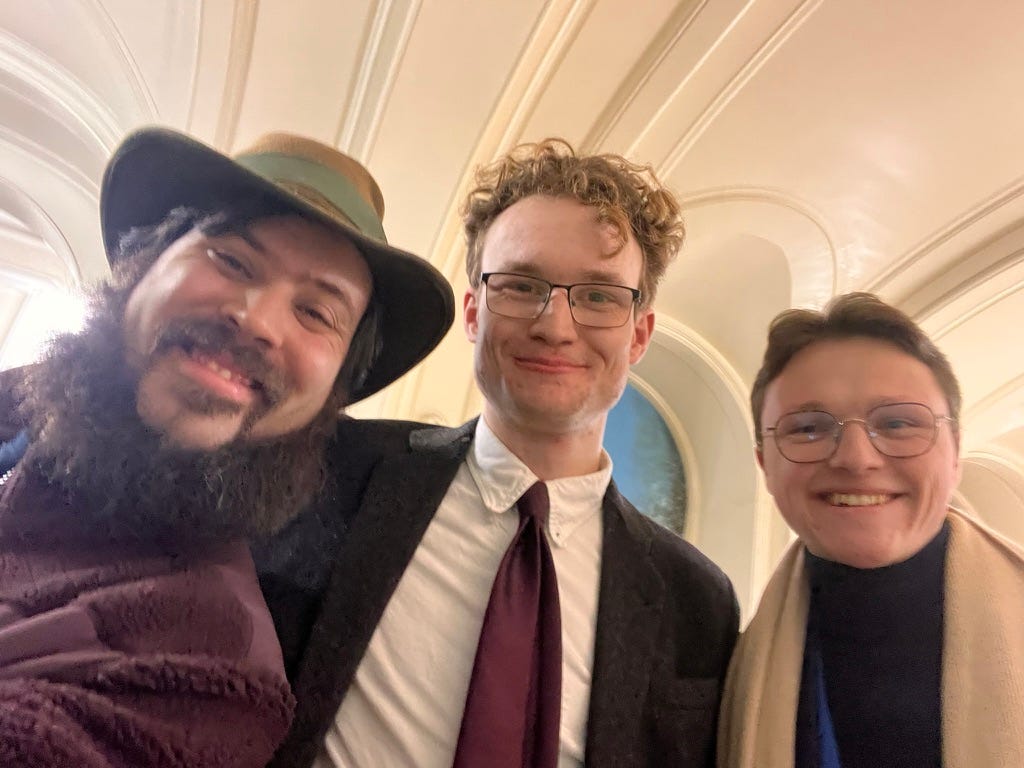
Actually, I will mention one name, which is Owen A. Barfield, the grandson of Owen Barfield, member of the Inklings and friend of Tolkien and Lewis, whose ideas about language and imagination deeply influenced them. I’ve read Barfield’s Poetic Diction and Saving the Appearances and they were instrumental in moving me towards a sacramental, participatory view of symbols and reality. So it was fascinating to meet the younger Barfield, for whom the great thinker and writer was simply “Grandfather”, and who in adult life has stepped up to steward his grandfather’s legacy with care.
The conference also included an art exhibition, creative performances, poetry, music and more.
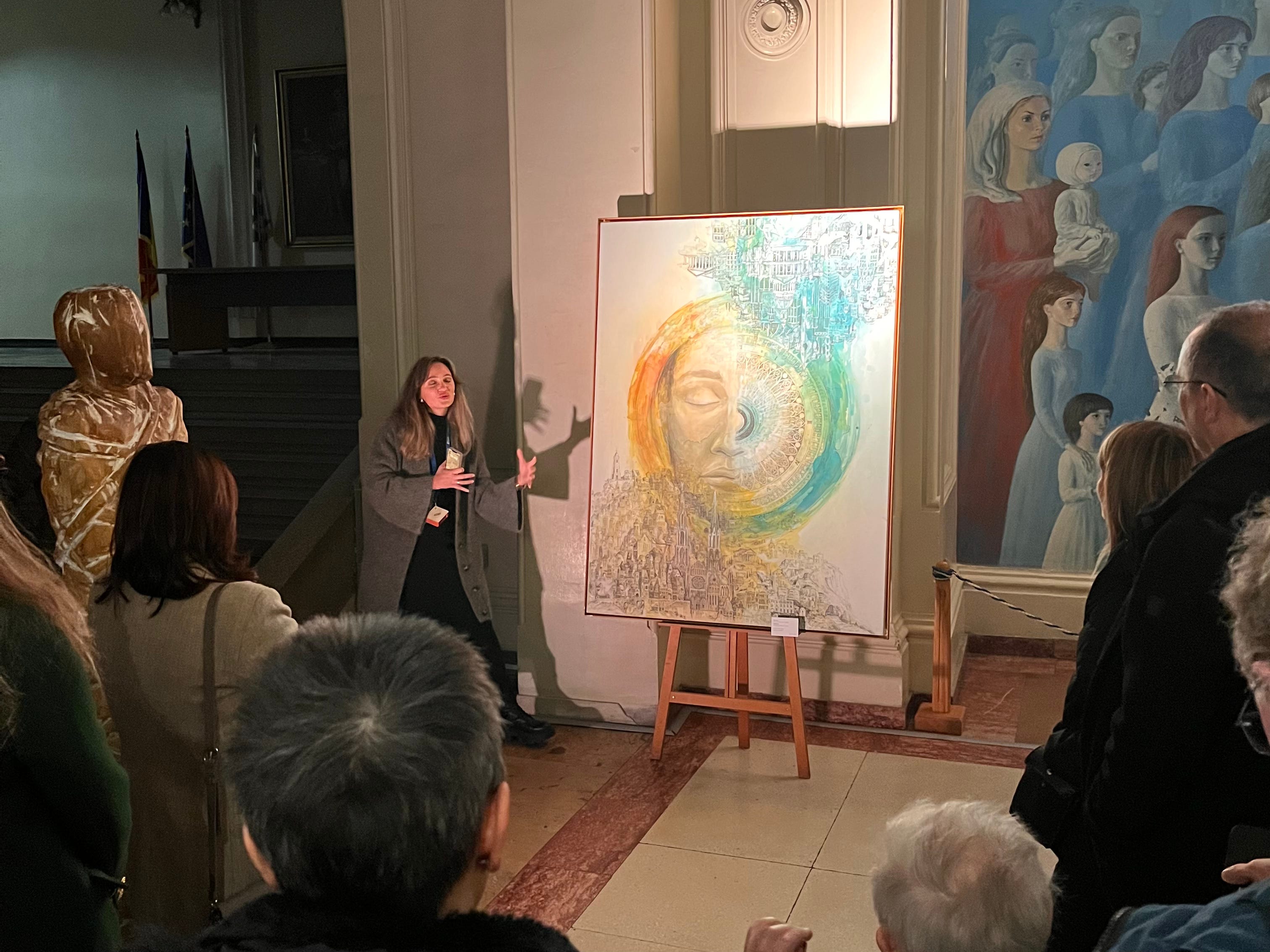
One of the plenary sessions involved a discussion of different people’s experiences of combining different types of work, such as academic and creative, and how these might form parts of one unified calling. For me, as I think through how to combine creativity, cultural engagement, Christian thinking and apologetics, this was a valuable discussion. And my heart was lifted by all the rich forms of creativity on display through the conference, especially the final concert on the Friday evening.
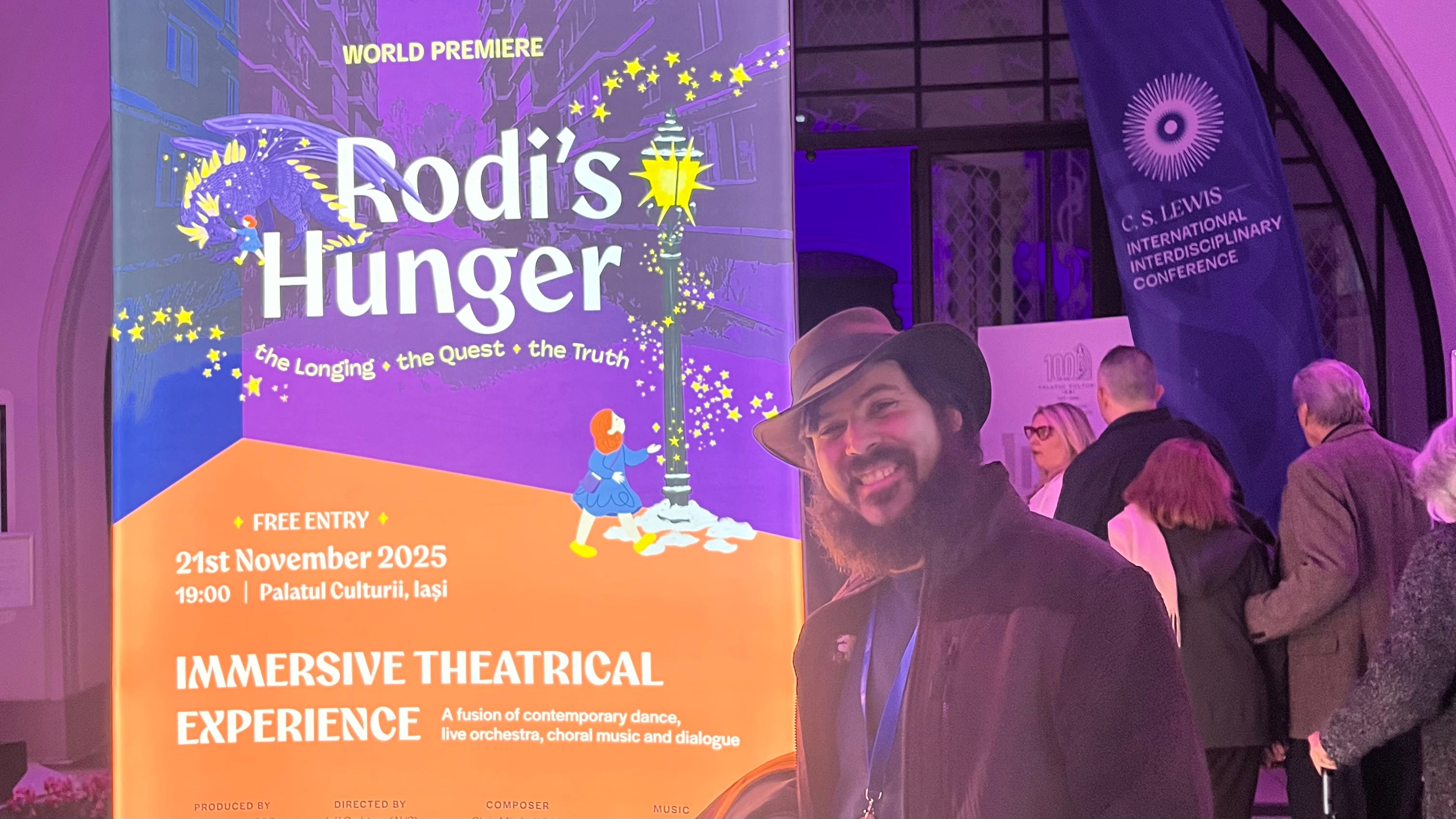
My contributions
My paper was Of Man’s First Disobedience: Childhood, maturity and the Fall in C. S. Lewis’s The Chronicles of Narnia and Philip Pullman’s His Dark Materials.
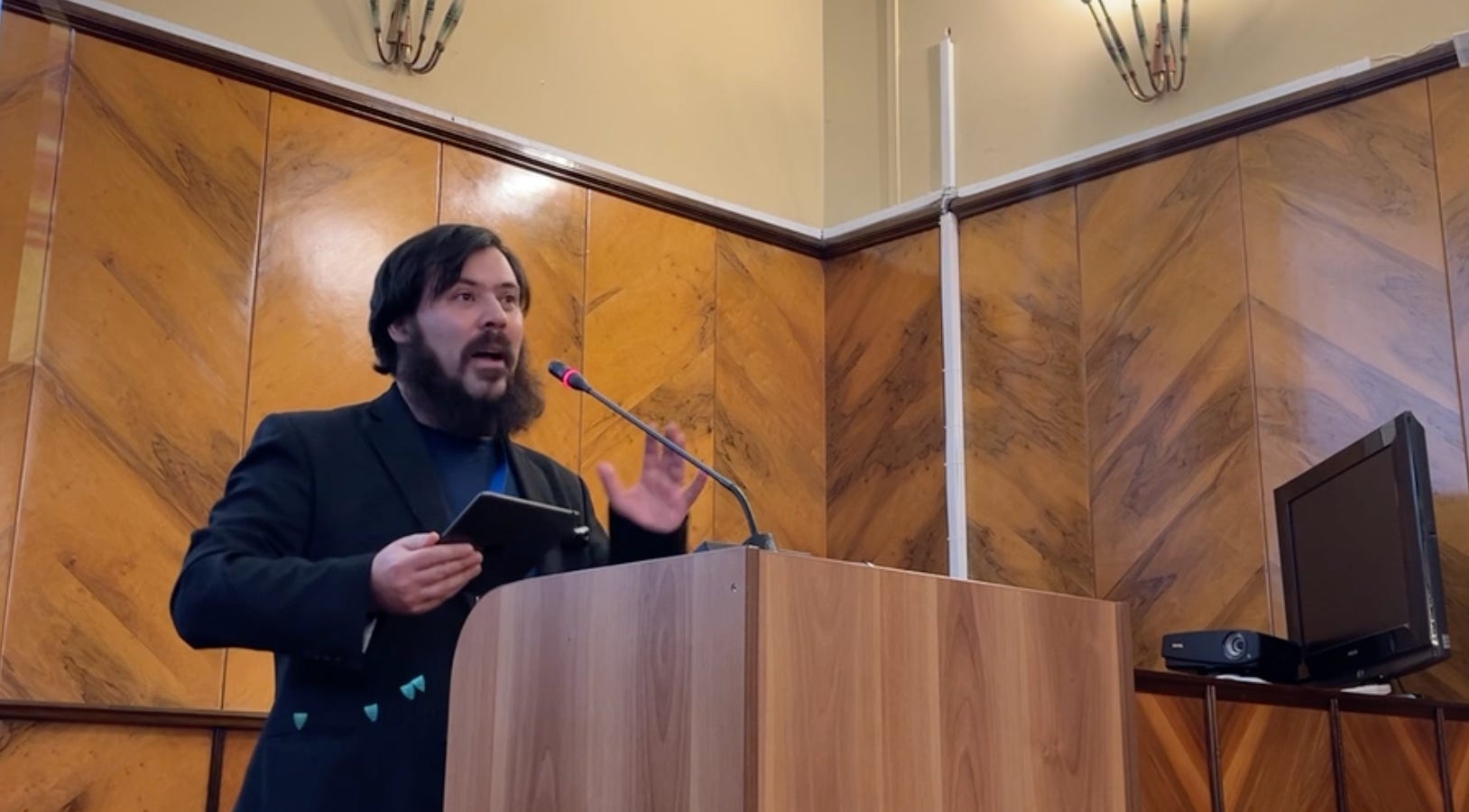
I explored the similarities between Lewis and Pullman as writers in the Romantic tradition, especially in their high view of imagination, while also the fundamental religious divide between Lewis’s Christianity and Pullman’s secular humanism, and how that plays out in their treatment of themes of temptation and Fall, especially drawing on Milton’s Paradise Lost as well as Genesis.
The paper seemed well-received and I hope to share an adapted version of it here on my newsletter in due course!
I also enjoyed the opportunity to share some of my creative work as a poet in the open mic sessions on the Tuesday and Wednesday evenings, including my poem ‘Bigger on the Inside’ which you can read here:

Remembering James Como
A shadow was cast in the wake of the conference with the news that James Como, one of the plenary speakers and a founding member of the New York C. S. Lewis society, had passed away in Bucharest on his journey back home.
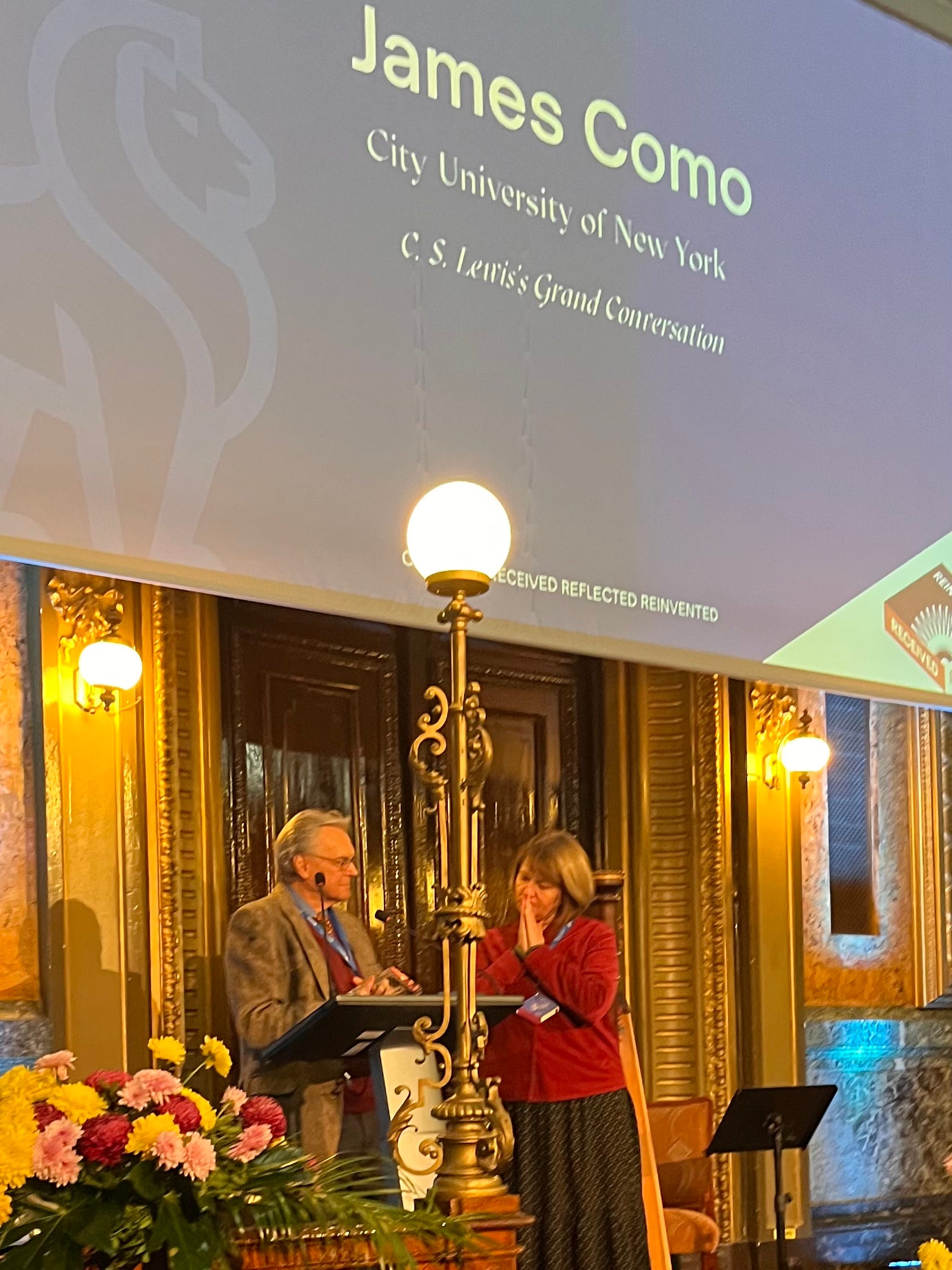
Como had spoken eloquently on the last day of the conference about C. S. Lewis’s Great Conversation, emphasising the towering genius of Lewis’s polyphonic voice, being outstanding as a scholar, as a storyteller and as a Christian apologist. Como identified three melodic lines in Lewis’s work, what he called the militant, marvellous and mystical, which were in constant conversation.
Como argued that Lewis’s mysticism is often overlooked, and that as much as Lewis delighted in quick-witted debate and cold-blooded reason, he was also a mystic, “from the depths of his soul to the heights of heaven”.
One of my abiding regrets of the conference will be that I didn’t get round to talking to Como personally, who was clearly a brilliant mind himself (there were lots of fascinating people to meet!) Now I’ll have to wait until I reach Aslan’s country to engage with Como in the ‘great conversation’ flowing out of C. S. Lewis’s life and works.

What will I take away from the conference?
The conference was very enriching intellectually, spiritually and creatively. I have no doubt that seeds planted at the conference will bear fruit: intellectually, creatively, and through friendships started or deepened.
Particularly helpful for me was seeing C. S. Lewis’s multifaceted achievements. While I am no Lewis, I’m finding the shape of my own multisided calling, and it was wonderful to be in a place where different threads in my sense of calling – intellectual, creativity, apologetics – converged so naturally.
What fruit will grow from it? New ideas and inspiration, certainly; ongoing relationships, hopefully. But only time - and the Spirit’s working – will tell.

Really loved this Caleb. Do you know if the conference in Romania was recorded?