


Happy Tolkien Reading Day! You can watch my reflection on the destruction of the Ring above, see it on YouTube, or read it below after a couple of updates…
What’s coming up
I’ve had a busy time lately working on my book on imagination and meaning-making, as well as a few different illnesses hitting the family, so I had to have a bit of a pause on releasing new essays and on new episodes of Imaginative Discipleship.
But fear not, there’s plenty coming up, with episodes on reimagining being human, on storytelling and on “baptising the imagination” with myth.
I recently finished reading Liturgies of the Wild by Martin Shaw and have lots I want to say about rewilding our imaginations…
Galahad and the Grail online book group
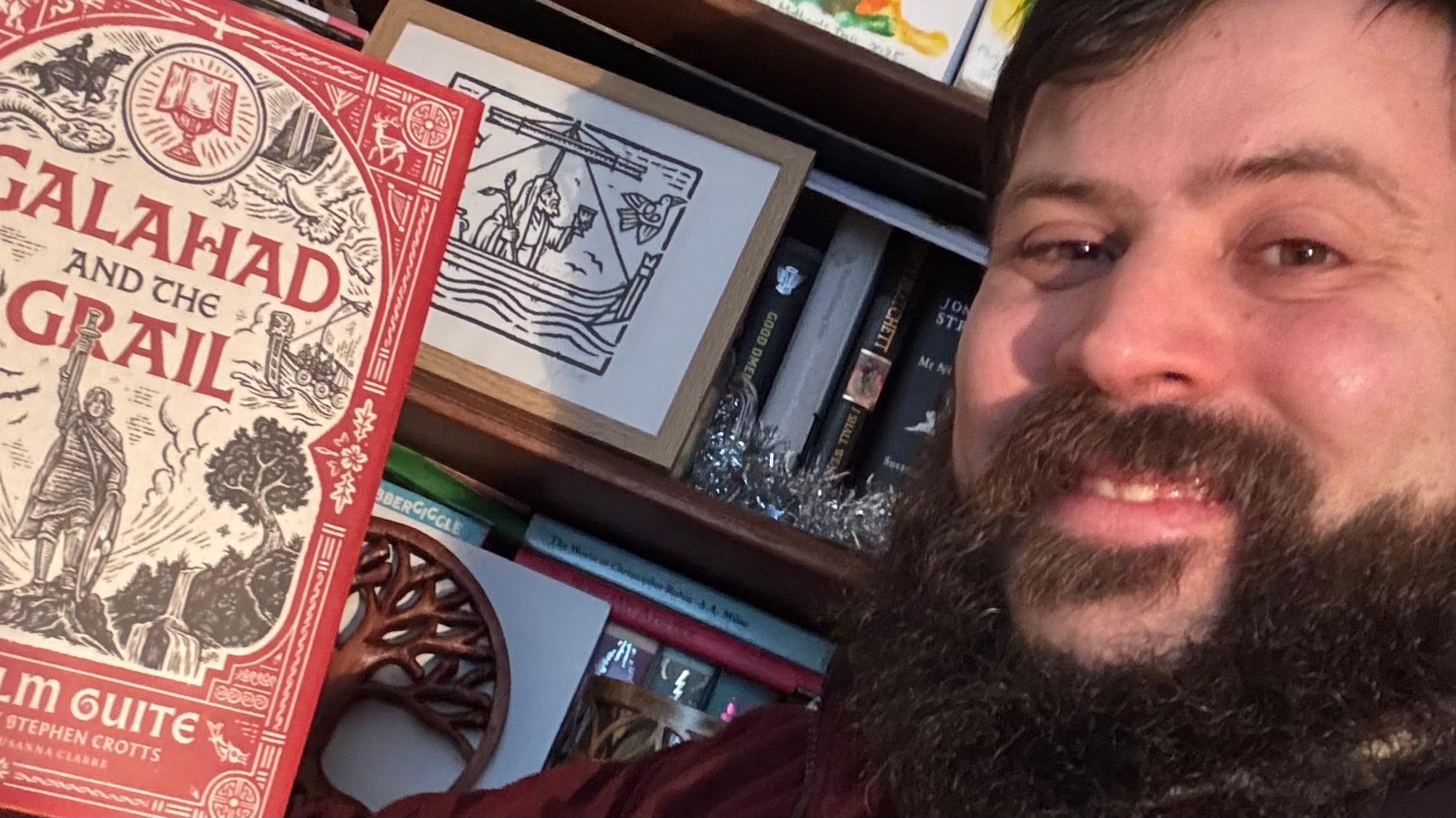
I’ve also been excited to get hold of my copy of Malcolm Guite’s new Arthurian epic poem, Galahad and the Grail.
I’ll be running an online book group to discuss it starting after Easter - if you would like to take part, whether new to the Arthur story, or immersed in the tales, please vote for the time slots that would suit you!
It’s open to all, whether paid or unpaid subscribers.
The Miracle at Mount Doom
On this day in Middle-earth, the Ring was destroyed. But this date, 25th March, is actually a theological Easter Egg that’s key to understanding the Lord of the Rings.
This date is the Feast of Annunciation, which in the liturgical calendar celebrates the angel Gabriel appearing to Mary to bring the news that she would give birth to the Messiah.
It’s also the traditional date of the Crucifixion. It’s one of several clues Tolkien scattered through the Lord of the Rings hinting at his deeper purpose.
Want another clue? We’re currently in the season of Lent, which in the run-up to Easter marks Jesus’ 40 days in the wilderness. The Fellowship left Lothlorien 40 days before Sam and Frodo reached Mount Doom - their own wilderness wandering.
Why did Tolkien do this? In a letter, he described Lord of the Rings as a fundamentally Catholic and religious work - though he was careful to absorb the symbolism deeply into the story.
The ending of the book, where — spoiler alert! — Frodo takes the Ring, only for the quest to succeed because Gollum seizes it and falls into the fires of Mount Doom, was what Tolkien called eucatastrophe, a happy twist which he saw as the key characteristic of fairy stories.
Tolkien saw fairy story eucatastrophes as a far off gleam of the story of the Gospel, of God’s gracious rescue of humanity from sin through Jesus’ death and resurrection.
In his essay ‘On Fairy-Stories’, Tolkien described Jesus’ incarnation, God coming as a human being, as the Eucatastrophe of history, and the Resurrection, when Jesus rose from the dead, as the Eucatastrophe of the incarnation.
So one of the reasons Lord of the Rings resonates powerfully with so many is because it is reflecting something of the power of the Christian story.
Does that resonate with you? Let me know what you think — and how you’re marking Tolkien Reading Day.
I’ve also got lots of thoughts about Stephen Colbert’s involvement with another new Lord of the Rings film, but I’ll share about that another time soon - but let me know in the comments your first reactions!

