

Hungering for rewilded faith: Martin Shaw's Liturgies of the Wild
On encountering God in nature, being matured by myths and dealing with pop Protestantism

This is an expanded version of my review first published in Evangelicals Now, July 2026. For EN, I assumed a conservative evangelical readership; here, I’ve reframed it to be more accessible to a broader readership, and added wider perspective on Eastern Orthodoxy and on my own wrestling with a sense of ecclesiastical homelessness.
Myths that make us
Whether or not there’s truly a “quiet revival”, something seems to be stirring. One recent prominent convert to Christianity is renowned storyteller Martin Shaw, who came to faith after a vision of Christ out on Dartmoor. Like fellow-convert and environmentalist Paul Kingsnorth, Shaw has been drawn into Eastern Orthodoxy, which seems to be attracting young men especially.
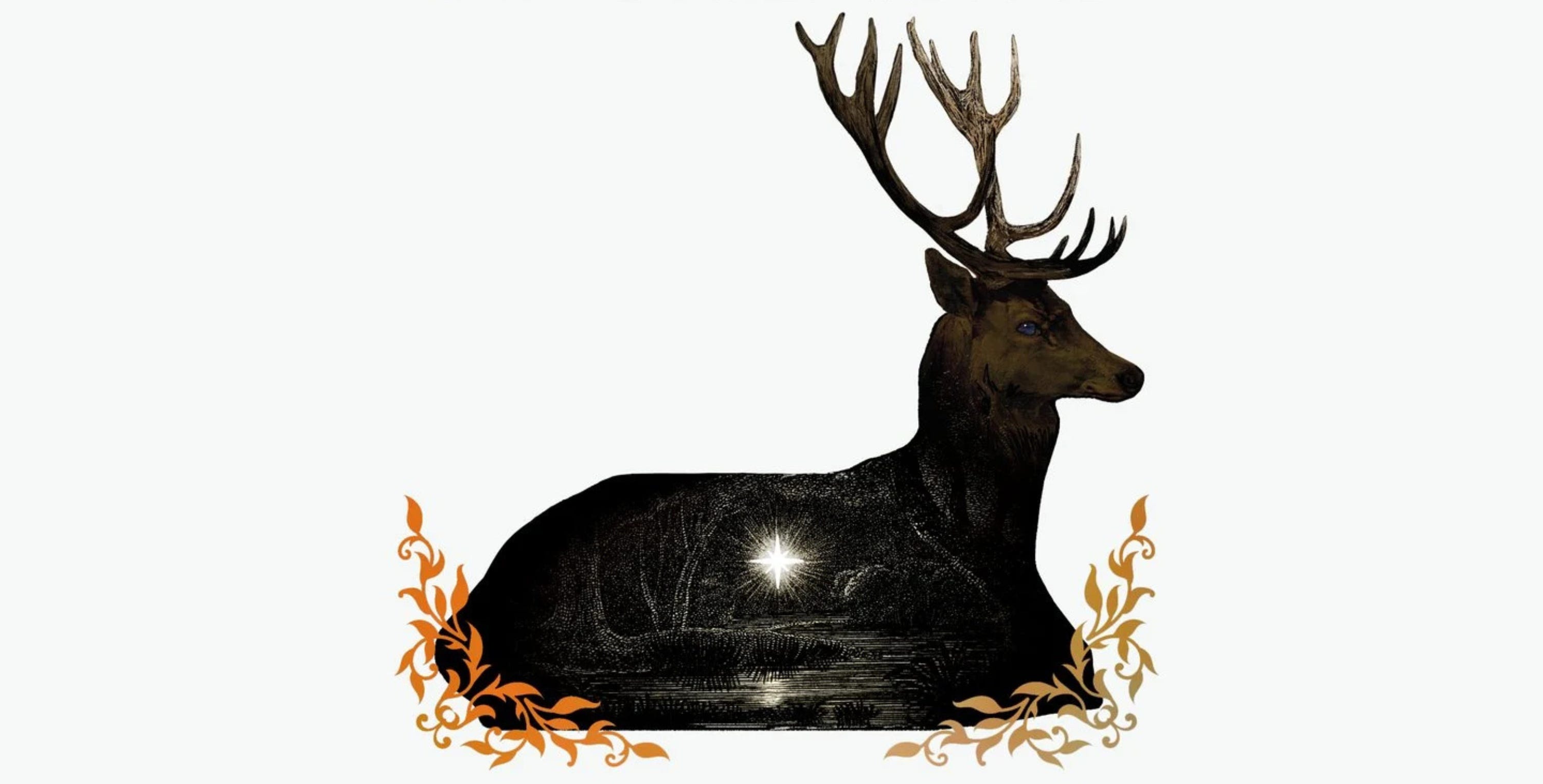
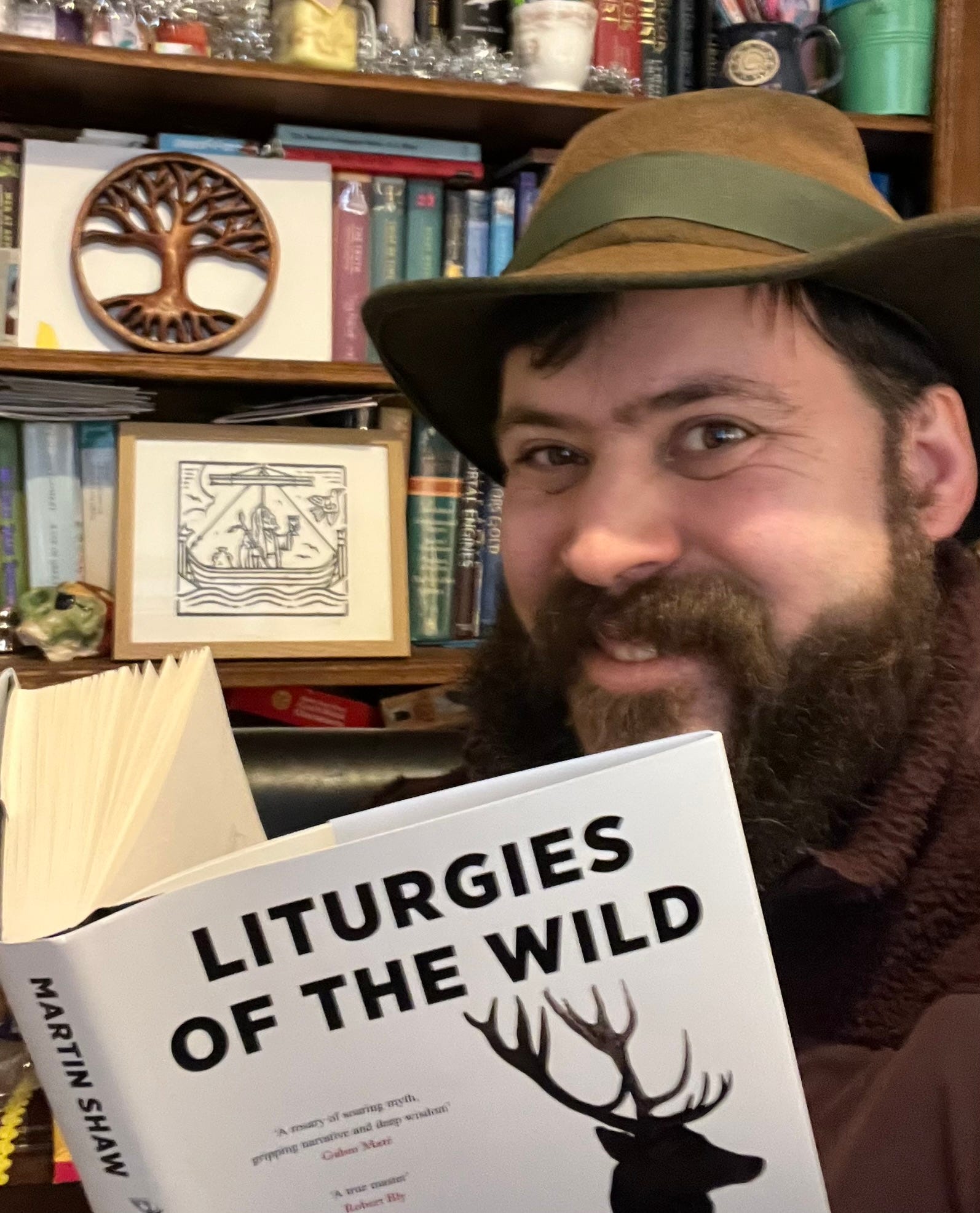
Liturgies of the Wild: The Myths that Make Us is Martin Shaw’s first major work since his conversion. It speaks to those in our culture hungry for roots and points them to the story of Christ that Lewis and Tolkien called the “true myth”.
For those seeking meaning in our culture, especially with a love of nature, Shaw offers an attractive entry-point for exploring faith. For those like me who are from the evangelical Protestant camp, it’s worth seeking to understand this phenomenon, to see both what we might learn and what we might respectfully critique or nuance.
Recovering enchantment
Shaw offers a shimmering view of nature as God-enchanted, wondering:
“Does God live everywhere, speak to us everywhere, or only in the Bible? Could I feel him talking to me in birdsong, or the roar of the sea, even a dream? Is that even allowed, that kind of free-range Christianity?”
(pp. 10–11)
I believe Shaw’s vision addresses some of the blind spots of what Glen Scrivener calls “pop Protestantism”, which in its efforts to avoid religious superstition (often as part of a strong anti-Catholicism streak) overcorrects into a reductionistic view of reality.
There is an important truth to affirm here: the world is the theatre of God’s glory. Scripture gives us the right lenses to interpret the world as declaring God’s goodness and beauty. An appreciation of nature and of myth is healthy – provided, I’d emphasise as a Protestant, that it remains moored in God’s Word as the big story that rightly shapes our view of reality.
Looking East?
I really appreciate the Eastern Orthodox emphasis on participation in God as the goal of salvation (though I’m not sure I’d go all the way with how the Orthodox frame it as theosis, becoming God in a stronger sense, though there’s lots more to unpack there).
Protestantism, on the other hand, tends to emphasise salvation in terms of the legal aspect of our guilt for sin in God’s eyes being taken away. There is a strong understanding of the importance of union with Christ within the Reformed tradition of Protestantism. But Pop Protestantism tends to neglect this, at its worst extreme reducing salvation to simply praying a prayer asking Jesus to forgive you, with no expectation of a changed life.
But to the extent that Orthodoxy rejects the Western legal viewpoint, rather than integrating it, I think it’s making a mistake. The Protestant emphasis on being declared righteous in Christ grounds our journey of transformation in a secure identity. As Glen Scrivener argues, Protestant Christianity gives us confidence in our salvation. Similar to adoption or marriage, the legal declaration and the relational journey that follows go hand-in-hand. We are adopted into Christ’s family; while the process of learning the habits of the family, growing into the family likeness, and getting to know and experience relationship with our Father are all vital, we do so knowing we are already loved and accepted because of what Christ has done.
The Orthodox emphasis on the relational/transformational aspects can leave it uncertain we are actually in the family. Are you doing enough? It makes our union with Christ more like co-habitation, while the Protestant emphasis on our change in legal status is like the marriage ceremony that definitively marks our entrance into our union with God.
With this context in mind, let’s turn back to Liturgies of the Wild specifically.
Out of focus and in focus
Shaw’s storytelling-led approach leaves doctrinal differences between Christian traditions largely under the surface. But I’d argue discernment is needed. On his conversion, Shaw says “I became a Christian. Or more likely, I realised I was a Christian. Just not a very good one. A little out of focus.”
As an evangelical, I agree: some important themes are out of focus, such as the new birth from death to life as a change of state, not simply a process of realisation. While Shaw affirms the necessity of repentance, he talks of guilt in terms of “paralysing emotions” more than as an objective moral state in need of forgiveness at the Cross (p. 127).
But at his best, Shaw’s love of story points us to the power of the Gospel story. Evangelical, “Bible-believing” churches can sometimes be in danger of flattening its power by “explaining the text” rather than proclaiming the living story of the risen Christ.
Shaw emphasises the ideas of being weathered and matured, and I could feel the myths he told at work on me, deepening my roots.
Feeling homeless?
As an evangelical with liturgical and sacramental leanings who loves nature and who deeply appreciates Shaw’s project, I feel rather homeless church-wise. On the ground, I see on the one hand, “pop Protestant” evangelical churches that tend towards ahistoricism, anti-Catholicism, pragmatism and reductionism, a faith thinned out by the impulse to market it as widely as possible; on the other, I see liturgical denominations that are unmoored from their historic and biblical roots, adrift on tides of liberalism and modernity.
I’m drawn towards Anglicanism as a “Reformed Catholic” tradition – “Catholic” in the sense of consciously being connected to the ancient, global church, and “Reformed” in emphasising the primacy of grace and authority of scripture. But the Church of England is in a mess, and the Church in Wales in a worse one.
Where do I turn? How might I renew my evangelical tradition from within? How can we hold together Scripture, Spirit and Sacrament?
But in asking these questions, I don’t feel alone because I know that others are asking versions of them, in their own contexts and in the light of their own stories – Rachel DeVore Fogarty’s recent posts about church have resonated a lot with me, including her recent digging into pop Protestantism, interrogating Glen’s categories. Something is stirring within the church as well as the wider culture in the hunger for ancient roots.
Hungry for a rewilded faith
This book stirs in me the feeling Shaw describes at his baptism:
“Hungry for a Christianity as huge as the forest, as magnificent as the stars that swirled overhead, as endless as the River Dart I heard rushing past.”
(pp. 17–18)
The question it leaves me with is this: how can we hold together story and doctrine, myth and truth, wildness and clarity, to speak to those searching for meaning today, while keeping Christ-centred and biblically-grounded? How might I “rewild” my faith, while keeping my evangelical Protestant commitments? How might an attentiveness to myth and storytelling enrich and help renew evangelicalism?
Like Aslan in the Narnia books, Liturgies of the Wild is good but not tame. It’s given me much to think about and digest. Read it with joy and adventurous discernment.
If you resonate with this post, please do “like” and comment.
Have you read Liturgies of the Wild – what did you think of it?
Do you find spiritual resonance in myth and nature?
If you’re in an evangelical context like me, how much space do you find for these approaches to faith? Let me know in the comments!
It was such a great book. I felt awakened by it, in the sense that it called out to the sleepy spirit of faith in me. I share a deep commitment to my Protestant faith and am fortunate that my church has a deep, beautiful liturgy which brings solemnity to the worship service. We have strong theological teaching and discipleship as well! But I’m understanding more and more how this is a rarity. Being raised Catholic and also a lover of nature and the fantastical, I think it has always been easy for me to reconcile much of the mystical while adhering to the Protestant understandings you specify.
All to say that Liturgies really pulled on the right strings in my heart. I felt motivated by it :)
Excellent article Caleb - reading in check in line at Nashville 😆👌