

A Wrinkle in Time's prophetic warning against AI conformity
How a 60-year-old science fiction classic can help us avoid capture by the Camazotz of AI slop

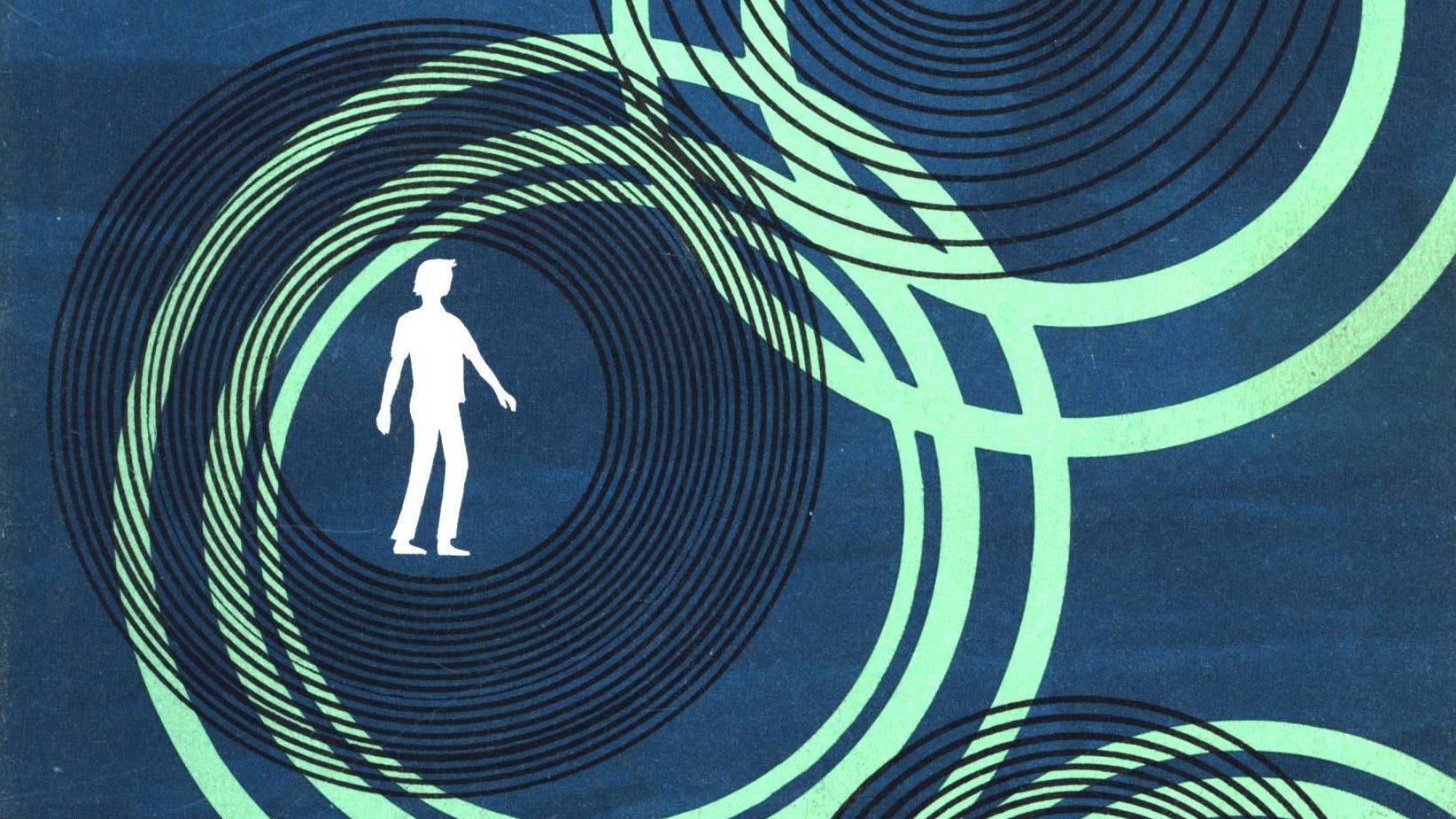
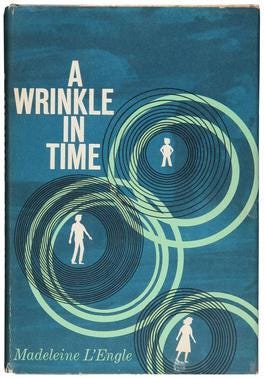
Recently I was struck by the relevance of Madeline L’Engle’s classic science fiction novel, A Wrinkle in Time, to the issue of AI. The book recently got a boost in attention by the references to it in season 5 of Stranger Things, with Holly Wheeler and friends using its ideas of Camazotz and the Black Thing to make sense of held captive under the control of the evil Vecna.
The novel’s themes of individuality and conformity seem to me prophetically relevant to a time when the misuse and overuse of AI threatens to swap human creativity with AI slop. What can we learn?
The power of the Black Thing
In A Wrinkle in Time, Meg Murray and her precocious younger brother Charles Wallace travel through time and space in search of their father. They arrive on the dark planet of Camazotz which is under the power of the Black Thing. Everyone there operate in robotic, society-wise conformity, under the power of IT, a disembodied brain with telepathic powers:
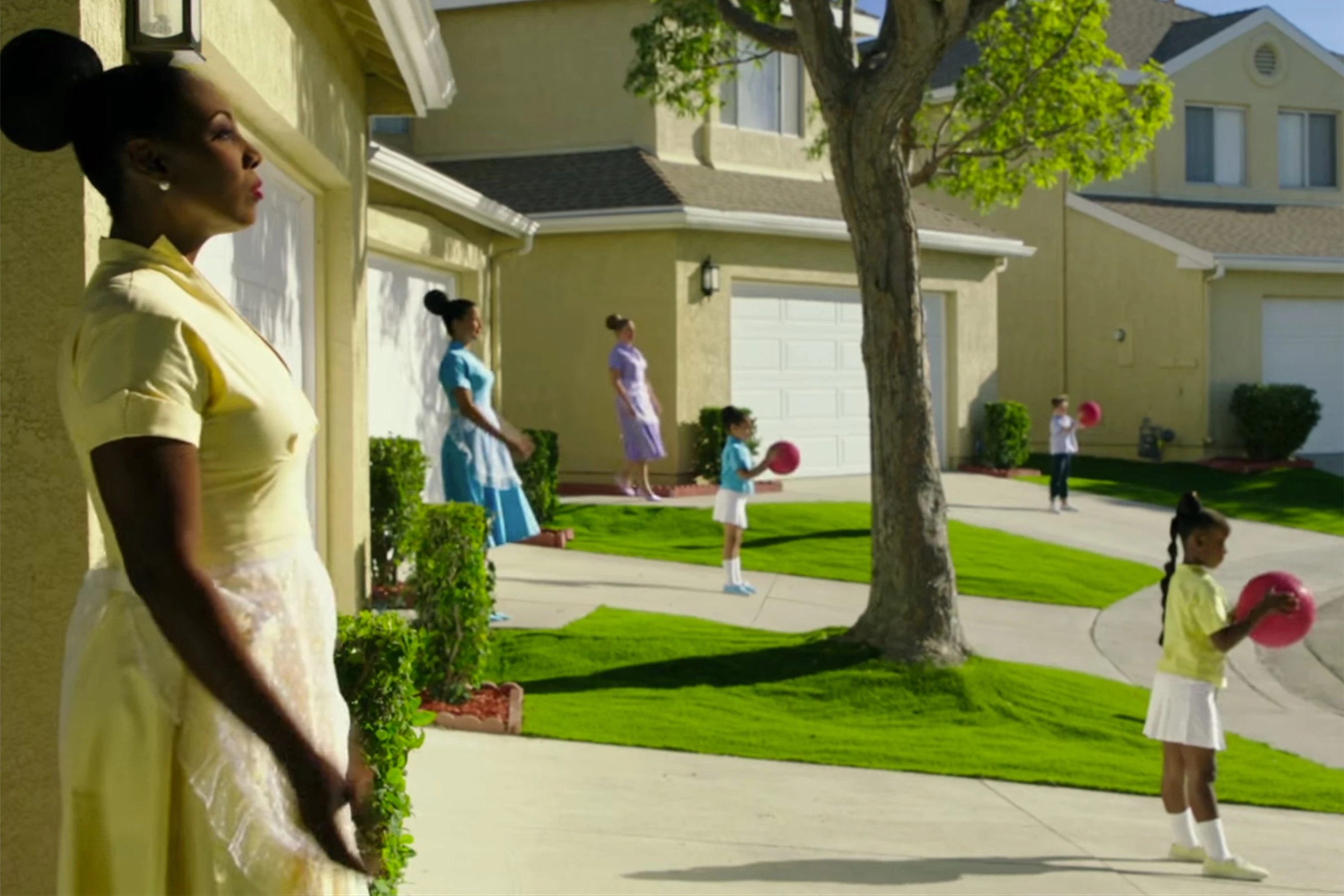
As the skipping rope hit the pavement, so did the ball. As the rope curved over the head of the jumping child, the child with the ball caught the ball. Down came the ropes. Down came the balls. Over and over again. Up. Down. All in rhythm. All identical. Like the houses. Like the paths. Like the flowers.
Charles Wallace thinks that he is clever enough and strong enough to enter IT’s influence to rescue his father without becoming controlled by it. But his overconfidence is his undoing. He becomes enslaved to IT.
Meg Murray escapes but to rescue Charles Wallace, she must go back to confront IT. It’s her love for her brother, embodied and human, that is able to rescue him.

Is AI like the evil IT?
AI can be a powerfully useful tool, but when it comes to mass popular adoption of generative AI, I’m unconvinced that the benefits outweigh the costs. But I keep using it from time to time myself, thinking that I am clever enough and strong enough to enter AI’s influence without becoming controlled by it… Oh. Wait.
So I wonder. As much as I like to think I can use AI discerningly, am I fooling myself like Charles Wallace, overconfident in my own abilities?
Part of the danger of AI is its blandness, the lack of obvious errors and flaws. In A Wrinkle in Time, Meg is given “the gift of her faults”:
“Meg, I give you your faults.”
“My faults!” Meg cried.
“Your faults.”
“But I’m always trying to get rid of my faults!”
“Yes,” Mrs. Whatsit said. “However, I think you’ll find they’ll come in very handy…”
― Madeleine L’Engle, A Wrinkle in Time
Our imperfections make us individual and human. I’m talking here in a creative sense rather than a moral sense – moral goodness accentuates, rather than diminishes, our uniqueness. But the pseudo-correctness of AI irons out our individuality.
Rescued by embodied connection
So as a cautious AI-experimenter, rather than outright AI-rejecter, the danger of becoming captive to AI like IT, like the Black Thing is there.
But if I am going too far, I hope like Charles Wallace I’ll have friends and family who can pull me out, through embodied love and connection.
It’s by being human in community, through conversation, through the awkward, inconvenient, glorious business of doing life with other sinners, that we truly grow and can guard ourselves against the worst effects of AI.
The awkwardness of community
Someone said that one of the advantages of an AI chatbot is that you can share anything with it without judgment. But shouldn’t that be what we do as human beings in community, especially among those of us as Christians seeking to live as the church? Not being non-judgmental to the degree that we never challenge one another in unhealthy behaviours (and for those of us who are Christians, in what we understand from the Bible to be sin). But in giving one another space to be heard and supported without fear, and when we need to be challenged, to receive that from people who genuinely care for us.

In an age of isolation and disembodiment, in a time when technology threatens more than ever what C. S. Lewis called the “abolition of man”, let’s live in ways that show the best of what it means to be human in community together, with real communication, real relationships, real love.
Is AI a blandness-engine? Or do you think it can enhance creativity? Should I throw out AI from my life altogether, or am I being too cautious? Let me know what you think!

Side note: What should we tell our kids about AI?
Tomorrow evening I’m going to be speaking to a youth group about AI at a church in Cardiff, and how engage wisely with it (or not).
While the AI-skeptical side of me is tempted to just tell them to flee from it, so that their developing minds can grow their own creativity and critical thinking first, I don’t think that’s actually the most helpful advice – not least because if I was a teenager, having an adult tell me not to do something would be a pretty big encouragement to carry on with that thing or to try it out!
So I’m going to try to give some ways of applying the ideas of the image of God and of idolatry in a way that can help them discern when it is harmful, and when it might be helpful. Hopefully it will give them some good things to think about!
My kids are 8, 6 and 3 years old, so not quite old enough for me to have to navigate this with them yet - though I’ll need to tackle the question of AI with them soon enough. If you’re a parent or teacher, how have you approached this?
One thing you should absolutely stress in talking to the youth group are the increasing numbers of people who are literally going insane from interacting with 'personalized' AIs - these things are designed to draw people in by 'affirming' them in ways that can lead to delusional beliefs...
...as well, such 'affirmation' is what causes the increasing numbers of young people who are being convinced to commit suicide...
I think the above would be more effective if you actually compiled an assortment of news articles covering actual cases that have been reported...
https://www.npr.org/sections/shots-health-news/2025/09/19/nx-s1-5545749/ai-chatbots-safety-openai-meta-characterai-teens-suicide
https://futurism.com/paper-ai-psychosis-schizophrenia
The fact that AI 'hallucinates' (confabulates) and tells outright lies should also be stressed in describing the dangers of engaging with it.
In the linked video, a psychiatrist discuses two particular research studies showing that (contrary to the doctor's initial thinking!) AI can actually make perfectly normal (psychologically healthy) people psychotic...
https://www.youtube.com/watch?v=MW6FMgOzklw
Here's another excellent video by the same doctor, outlining "How AI is Killing Your Potential"
https://www.youtube.com/watch?v=BzsLbHoNXTs
(Basically, "the more you use AI, the more your brain will rust"!
Considering that all of the above is just a 'drop in the bucket' of info on the harmfulness of AI, I just have to wonder whether using it is worth the potential risks...
I’d love to know what you end up telling the youth… A.I. is such a contentious and confusing issue. I do use ChatGPT every week or so, but really only like Google, but more detailed. Eg, the last time I used it I asked for a long list of all the most valuable artifacts, big and small, real or mythical. It’s for a picture book I’m writing, but all Google would give me was little museum artifacts. A.I’s list was not exhaustive, but it was more what I was looking for and sparked far more ideas than Google did. I’m not sure what my point is… basically, A.I. is what I always wanted Google to be, but I try to leave it as a last resort.